Most first-time R290 heat pump quotations from Chinese factories are not comparable, and the reason is rarely the factories. It is the request for quotation. If the RFQ does not fix the rating condition, the flow temperature, the load profile and the evidence format, every supplier answers a slightly different question, and you end up comparing a COP measured at 7°C ambient and 35°C water against one measured at 2°C and 55°C. Both can be honest. Neither belongs in the same column.
This article is the document itself: each section is one field group, with why it matters, what goes wrong when it is vague, and wording you can copy.
· Fix the rating condition first. A capacity or COP figure without ambient and flow temperature attached is a claim, not a specification.
· Separate steady-state performance (EN 14511) from seasonal performance (EN 14825), and say which one each requested number refers to.
· Ask for third-party test reports and certificate numbers, not self-declared datasheets.
· State the application with every efficiency class: space heating A+++ means ηs at or above 175% in the low-temperature application and at or above 150% in the medium-temperature application.
· Sound power needs its own field with a declared measurement basis, or quoted dB figures cannot be compared.
· Commercial fields (minimum order quantity, lead time, spare parts, warranty) belong in the same document as the technical ones, because they move landed cost.
Why it matters: capacity and COP are functions of ambient air temperature and leaving water temperature. Without both, a quote is unanchored.
What goes wrong if vague: suppliers default to the condition that flatters their product, usually A7/W35, and the unit is never characterised at the condition your installed base runs.
Example wording:
· Application: residential air-to-water heating and cooling, low-temperature application (design flow temperature 35°C), plus a second set of figures for the medium-temperature application at 55°C.
· Declared rating conditions: A7/W35, A2/W35, A minus 7/W35, A7/W55, with heating capacity in kW and COP per EN 14511.
· Climate zone for seasonal figures: average climate, per the applicable European test standard.
EN 14511 covers steady-state rated COP and EER. EN 14825 covers part-load seasonal SCOP and SEER, from which the ErP seasonal space heating efficiency ηs is derived. EN 12831 is the design heat load standard, for project documentation rather than the quotation.
Why it matters: a nominal capacity says nothing about behaviour at low load, where a residential unit spends most of the heating season.
What goes wrong if vague: an oversized or narrow-modulation unit cycles, and seasonal efficiency falls below the rated COP that was signed off.
Example wording:
· Nominal heating capacity at each declared rating condition, in kW.
· Minimum and maximum modulated capacity at A7/W35, with the resulting turndown ratio.
· Cooling capacity and EER at A35/W18 and A35/W7, if cooling is in scope.
· Maximum leaving water temperature at minus 7°C ambient, as stated in the model technical manual.
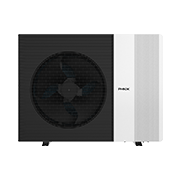
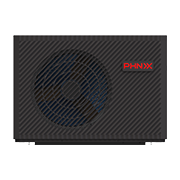
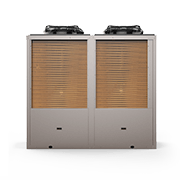
PHNIX GreenTherm Pro is an R290 air-to-water heat pump for residential heating and cooling, rated A+++ in the low-temperature space heating application and specified down to minus 30°C ambient. It has been measured by TÜV SÜD RED and HLK Stuttgart at SCOP 5.55, published with its test context, which is the format an RFQ should demand. Anything outside published figures should be requested as "per the model technical manual".
Why it matters: the declared class controls incentive scheme eligibility and, in some cases, market access. What goes wrong if vague: a supplier quotes "A+++" with no application attached, and that word can mean two different products.
Example wording:
· Minimum seasonal space heating efficiency ηs at or above 175% in the low-temperature application under Regulation 811/2013 Annex II Table 2, which is the A+++ threshold for that application.
· Confirm compliance with the minimum ηs levels in Regulation 813/2013 Annex II 1(b): 125% low-temperature and 110% medium-temperature.
· If a domestic hot water function is declared, state the declared load profile (for example M, L or XL) alongside the water heating efficiency ηwh, because the Regulation 812/2013 Annex II Table 1 A+++ thresholds are profile-dependent: 163% for M, 188% for L and 200% for XL.
· Supply the ErP product fiche and label artwork in editable form for each SKU. This field is not pedantry: a quoted ηwh of 170% is A+++ on profile M and below A+++ on profile L.
Why it matters: R290 is the reason this RFQ exists, and the regulatory ground has moved. What goes wrong if vague: replies still cite the repealed regulation or quote GWP from an older assessment basis.
Example wording:
· Refrigerant: R290, GWP100 of 0.02 under Annex VI of Regulation (EU) 2024/573, which has applied since 11 March 2024 and repealed Regulation 517/2014. GWP values follow the IPCC Sixth Assessment Report.
· Confirm product category against Annex IV of Regulation (EU) 2024/573: self-contained heat pumps at or below 12 kW with refrigerant GWP of 150 or more are restricted from 1 January 2027, as are split air-to-water units at or below 12 kW on the same threshold, with a full restriction on fluorinated refrigerants in self-contained units at or below 12 kW from 1 January 2032. Where site safety prevents use of a refrigerant below GWP 150, the ceiling relaxes to 750.
· Refrigerant charge and installation clearances: charge limits are set by refrigerant LFL and room or installation volume under EN 378 and IEC 60335-2-40 (7th edition, 2022); confirm the actual clearance with local installation rules and the manufacturer's manual.
If the shortlist is still open on refrigerant strategy, that comparison logic sits in a separate discussion of R290 against R32 and R454B for European procurement, best settled before the RFQ goes out. R32 carries a GWP100 of 675 under Annex I of the same regulation and sits inside the HFC quota system. R410A and R454B are blends and are not listed individually in the annexes of Regulation (EU) 2024/573, but both sit far above the 150 GWP threshold that drives the 2027 restrictions. Article 13(4) restricts fluorinated gases with GWP of 2500 or more for servicing air conditioning and heat pumps from 1 January 2026; there is no 750 tier servicing ban here.
Why it matters: noise decides planning approval in dense housing, and interface mismatches surface on site after the container lands.
Example wording:
· Declared outdoor sound power level in dB(A), on the measurement basis used for the ErP product fiche, at the rated condition and at minimum modulated capacity, with the acoustic test report reference.
· Quiet mode: available yes or no, resulting sound power level, and the capacity derating.
· Power supply: 230 V single phase or 400 V three phase 50 Hz, maximum running and starting current, recommended breaker and cable size.
· Hydraulic: connection size and type, integrated circulation pump, expansion vessel, and backup heater stages in kW, each stated yes or no.
· Controls: Modbus register map supplied, dry contact inputs for tariff and smart grid signalling, photovoltaic surplus input, and maximum units per cascade.
· Cybersecurity: whether an EN 18031 certificate is held for the connected product, with the certificate number.
PHNIX holds CE, UKCA, Keymark, AHRI, ETL and ERP certifications, with AHRI performance audits passed at 100% compliance for three consecutive years (2023, 2024 and 2025), and in 2025 received the heat pump industry's first EN 18031 cybersecurity certificate.
| RFQ field | Must be third-party evidenced | Comparable across suppliers without it | Typical failure if omitted |
|---|---|---|---|
| Rating conditions (EN 14511) | Yes | No | Quotes measured at different conditions |
| Seasonal ηs and SCOP (EN 14825) | Yes | No | Incentive eligibility cannot be confirmed |
| ErP class with application stated | Yes | No | A+++ claim with no defined meaning |
| Water heating ηwh with load profile | Yes | No | Class threshold misapplied |
| Modulation range | No | Moderate | Oversizing and short cycling |
| Sound power level | Yes | No | Planning refusal, complaints |
| Refrigerant and GWP basis | Yes | Moderate | Outdated regulation cited |
| Control interface and register map | No | Moderate | Integration rework on site |
| Certification numbers | Yes | No | Market surveillance delay |
| Spare parts and warranty | No | Not applicable | Unbudgeted service liability |
| MOQ and lead time | No | Not applicable | Landed cost and season missed |
An RFQ that asks for compliance gets a yes. One that asks for certificate numbers gets verifiable documents.
Example wording:
· Supply the CE declaration of conformity, the UKCA declaration where the UK is in scope, the Keymark certificate number where applicable, the ErP product fiche, and the certification body name for each.
· Test reports must come from an accredited third-party laboratory; factory self-test reports will be recorded but not scored.
· Supply the full report, not the summary page, including sample serial number and test conditions.
· State whether the quoted model is the tested model or a variant, and list any differences.
Shortlisting factories that can actually produce this evidence is a separate exercise, and the criteria are set out in this guide to R290 monobloc heat pump manufacturers and the European RFQ process. Run that step first, then send this field list to the survivors.
These fields move landed cost more than a 2% unit price difference, yet they are usually left to the pro forma invoice.
Example wording:
· Packaging: carton dimensions and gross weight, pallet configuration, units per 40 ft container, drop and vibration test evidence.
· Labelling: nameplate language, importer address block, energy label placement, and whether artwork changes are chargeable.
· Spare parts: parts list with reference numbers, availability commitment in years after last shipment, lead time for compressors and controller boards.
· Warranty: duration for unit, compressor and controller separately, whether labour is included, and the evidence required for a claim.
· Commercial: minimum order quantity per SKU and per label variant, lead time from deposit, Incoterms, payment terms, price validity.
A representative European scenario shows why commercial fields are technical fields in disguise. Take a dwelling with 4,000 kWh of annual space heating electricity consumption as modelled by the installer. At the Eurostat second half 2025 tax-inclusive EU27 residential price of 0.29 EUR per kWh for the 2,500 to 5,000 kWh band, that is roughly 1,160 EUR per year of running cost. A supplier whose replacement controller board takes ten weeks to arrive can cost the end customer more across one winter than the price gap between two quotes. That is an assumption-based illustration, not a measured result.
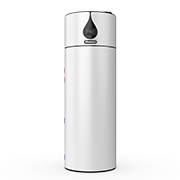
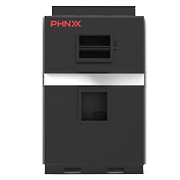
PHNIX airMono is the world's first R290 indoor all-in-one heat pump, built for space-constrained retrofits where an outdoor unit cannot be sited, and it belongs to the same residential heating and cooling range as GreenTherm Pro. Both platforms use AI Full Inverter control trained on data from more than 30,000 operating units, with EVI low-temperature technology, photovoltaic integration and smart grid signalling, which maps onto the control interface fields above.
For the performance evidence field, the TÜV SÜD RED and HLK Stuttgart SCOP 5.55 report page shows what a compliant reply looks like: a named laboratory, a named model, a traceable figure. Guangdong PHNIX Eco-energy Solution Ltd was founded in 2002, employs more than 1,000 people and exports to over 90 countries.
Q: Should I ask for COP or SCOP in the RFQ?
A: Both, in separate fields, with the standard named. COP under EN 14511 is a steady-state figure at a stated condition, useful for checking sizing at the design point. SCOP under EN 14825 is a part-load seasonal figure and is what the ErP ηs derives from, so it governs labelling and most incentive schemes. Requesting one without the other leaves a gap a supplier can fill selectively.
Q: Is it enough to require CE marking?
A: No. CE marking is self-declared for most applicable directives, so requiring it only confirms a declaration exists. Ask for the declaration of conformity, the harmonised standards on it, notified body involvement where relevant, and the accredited test reports behind it. For the UK, request the UKCA declaration separately.
Q: How should the RFQ handle hot water temperature and Legionella control?
A: Do not write a single European temperature value into it, because there is no harmonised EU storage temperature. Directive (EU) 2020/2184 is risk-assessment based, with a Legionella parameter value of less than 1 000 CFU/l in Annex I Part D and a requirement in Article 10(3)(e) for effective, risk-proportionate control measures, and it contains no temperature requirement. In the United Kingdom, HSE guidance HSG274 Part 2 sets hot water storage at a minimum of 60°C, 50°C at the outlet within one minute (55°C in healthcare premises), cold water below 20°C and return temperature not below 50°C. In Germany, central domestic hot water systems are governed by DVGW technical rules; check the current edition and the local requirements before fixing a setpoint. Ask for the achievable setpoint range, and leave the target value to the destination market.
An RFQ is a comparison instrument, and its precision sets the ceiling on your supplier decision. Fix the rating conditions and name the test standard beside every performance number. State the application whenever you cite a space heating class, and the load profile whenever you cite a water heating class. Demand third-party reports with sample serial numbers rather than datasheets. Put sound power, control interfaces, spare parts and minimum order quantity in the same document as the kW figures, because they land in the same total cost. Send it unchanged to every supplier, and the replies will line up in columns you can add.

Guangdong PHNIX Eco-energy Solution Ltd.
Tel: +86-4009-4009-00
Address: NO.3 Tianyuan Road, Dagang Town,
Nansha, Guangzhou, Guangdong, PR. China.