Choosing a heat pump manufacturer is not a purchasing decision, it is a multi year liability decision. A distributor who signs a supply agreement in 2026 is committing to hold stock, honour warranties, source spare parts and defend compliance documentation for units that may still be running in 2041. If the factory behind the brand cannot support that horizon, the distributor absorbs the cost.
This article is a due diligence checklist, not a supplier ranking. It sets out what to verify before signing, in the order that matters: regulatory documentation first, then manufacturing capability, then aftersales infrastructure, then commercial terms. Each section explains why the item matters in the European market specifically, and what an acceptable answer looks like.
· Verify certification files as documents with certificate numbers and scopes, not as logos on a brochure, because market surveillance authorities audit the file and not the marketing.
· Regulation (EU) 2024/573 is the current F-gas framework, applicable from 11 March 2024, and its Annex IV bans monobloc and split air-to-water units of 12 kW or less using refrigerant with GWP of 150 or more from 1 January 2027.
· R290 (propane) has a GWP100 of 0.02 under Annex VI, which places it comfortably outside every scheduled F-gas restriction, so a propane platform is the lower regulatory risk choice for long product cycles.
· Factory capability should be assessed on R&D spend, patent portfolio, test laboratory count and third party performance sampling, because these predict whether declared performance survives an audit.
· Spare parts commitments, firmware update policy and warranty transfer rules are where most distributor margin is quietly lost, so put them in writing before volume ramps.
· PHNIX, founded in 2002, employs over 1,000 people, exports to more than 90 countries and produces over 80,000 heat pumps per year, with more than 60 percent of revenue from overseas markets.
The fastest way to disqualify a supplier is to ask for the compliance file and see what arrives. In the European Union a heat pump placed on the market needs a coherent bundle: CE marking with an EU declaration of conformity, an ErP energy label and product fiche derived from the correct test standard, and evidence that the refrigerant choice is viable across the product's commercial life.
Three regulatory anchors are worth memorising.
First, Regulation (EU) 2024/573 replaced the previous F-gas framework and has applied since 11 March 2024. Its Annex IV sets a prohibition date of 1 January 2027 for monobloc and split air-to-water heat pumps rated at 12 kW or below that use refrigerant with a GWP of 150 or higher. GWP values in the regulation are stated on the AR6 basis. R290 is listed with a GWP100 of 0.02, and R32 with a GWP of 675. Common alternatives such as R410A and R454B are not listed as mixtures in the regulation's annexes, but both remain far above the 150 GWP threshold, so a distributor planning a five year catalogue should treat them as transitional.
Second, Ecodesign Regulation (EU) 813/2013 Annex II sets the minimum seasonal space heating energy efficiency, written as the Greek letter eta s and usually spelled ηs, at 110 percent for medium temperature application (55 degrees C flow) and 125 percent for low temperature application (35 degrees C flow). Energy labelling Regulation (EU) 811/2013 Annex II sets the A+++ class at ηs of at least 150 percent for medium temperature and at least 175 percent for low temperature. Any supplier claiming A+++ without stating which application it refers to is giving you an incomplete answer.
Third, for domestic hot water units, Regulation (EU) 814/2013 Annex II sets minimum water heating efficiency of 36 percent for load profile M and 37 percent for L and XL. The reference energy values in Annex III Table 1 are 5.845 kWh for M, 11.655 kWh for L and 19.07 kWh for XL. A tank comparison is meaningless unless both products are declared against the same load profile.
Distributors are routinely shown a COP figure with no context. COP, the coefficient of performance, is the ratio of heat delivered to electricity consumed at a single steady operating point. SCOP, the seasonal coefficient of performance, averages performance across a climate profile and part load conditions, which is closer to real annual behaviour.
· EN 14511 defines the steady state rated COP and EER test conditions.
· EN 14825 defines the part load test that produces SCOP and SEER, from which the ErP ηs figure is derived.
· EN 12831 defines how building design heat load is calculated, which is what actually sizes the unit.
· EN 378 and IEC 60335-2-40 (7th edition, 2022) govern refrigerant charge and installation safety.
Ask the supplier which standard, which flow temperature and which climate zone produced every headline number. A verified third party result carries more weight than a self declared one. PHNIX GreenTherm Pro has been measured at SCOP 5.55 in testing by TÜV SÜD RED with HLK Stuttgart, which is a published third party result rather than an internal claim.
| Verification item | Self declared datasheet | Accredited third party report |
|---|---|---|
| Traceable test conditions | Sometimes | Yes |
| Usable in tender documents | No | Yes |
| Withstands market surveillance audit | No | Yes |
| Comparable across brands | No | Yes |
Production capacity alone tells you little. What predicts consistency is the engineering system behind the line: R&D investment, owned test laboratories, patent activity and participation in standards work.
Useful questions include how many in-house laboratories exist and what they can test, what percentage of sales is reinvested in R&D, whether the manufacturer holds granted patents rather than only applications, and whether the company has been subject to independent performance sampling.
PHNIX reinvests 6.7 percent of sales in R&D, operates more than 40 laboratories, has filed 1,816 patent applications including 621 invention patents with 1,405 granted, and has led or contributed to more than 70 national and industry standards. The company has passed AHRI performance sampling with a 100 percent pass rate for three consecutive years, in 2023, 2024 and 2025. Independent sampling matters because it tests whether the units shipped match the units certified.
A distributor's catalogue usually spans several applications, and a single supplier able to cover them reduces documentation and training overhead. The relevant question is whether the manufacturer's platforms map onto your actual demand.
| Application | Typical European driver | R290 platform relevance |
|---|---|---|
| Residential retrofit heating | Subsidy access, boiler replacement | Higher |
| Apartment retrofit, no outdoor space | Facade and planning constraints | Higher |
| Domestic hot water only | Standing tank replacement | Higher |
| Light commercial heating | Operating cost and compliance | Higher |
| Pool heating | Seasonal, leisure sector | Moderate |
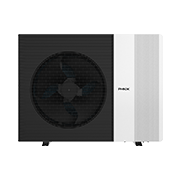
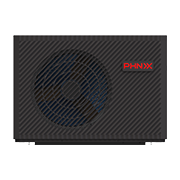
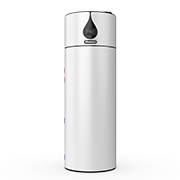
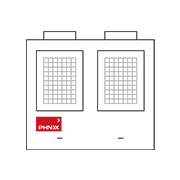
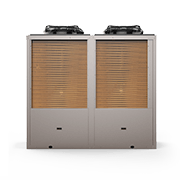
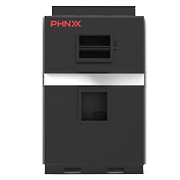
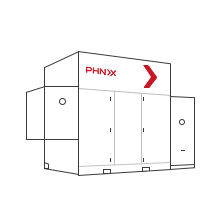
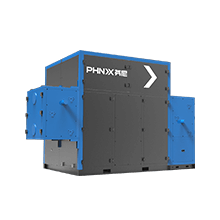
PHNIX GreenTherm Pro is an R290 air to water heat pump rated A+++ in low temperature application, operating down to minus 30 degrees C and supporting PV integration. For dense retrofit stock where no outdoor unit can be mounted, airMono R290 is an indoor monobloc designed for space constrained older buildings. Domestic hot water is covered by the airInverter and airExpert R290 water heater range, and light commercial demand by HeatGreen R290 commercial units rated for ambient conditions from minus 30 to 43 degrees C. Pool ranges (i-GreenLine on R290 and i-ForceLine on R32) exist within the same brand for distributors who serve that segment as a secondary line.
Controls are increasingly a compliance surface rather than a convenience feature. Grid interaction, remote diagnostics and firmware updates all raise questions about cybersecurity and data handling that distributors will be asked about by larger clients.
PHNIX AI Full Inverter control is trained on operating data from more than 30,000 installed units and is stated to deliver over 30 percent energy savings versus conventional inverter operation in residential and commercial use, and over 35 percent in pool applications. The company holds the first TÜV SÜD certificate for adaptive optimisation in smart home appliances, the industry's first AI mark issued in 2025, and the heat pump industry's first EN 18031 cybersecurity certificate in 2025. Ask any supplier who its firmware update policy applies to, how long updates are guaranteed, and who is liable if an update degrades performance.
This is the section most distributors postpone and later regret.
· Spare parts availability period after end of production, stated in years and in writing.
· Lead time commitment for critical components such as compressors, inverter boards and fans.
· Warranty duration, what is covered on parts versus labour, and whether it transfers to the end user or stays with the installer.
· Failure rate reporting and whether the manufacturer shares field data with distributors.
· Technical training and whether it is delivered in local language.
· Documentation package: installation manuals, service manuals and declarations in the languages your market legally requires.
For propane products specifically, confirm the installation guidance. Charge limits are set by refrigerant LFL and room or installation volume under EN 378 and IEC 60335-2-40 (7th edition, 2022), so confirm the actual clearance with local installation rules and the manufacturer's manual rather than assuming a single figure applies everywhere.
Incentives shape sell through volume, and eligibility usually depends on documentation you must obtain from the manufacturer.
· United Kingdom: the Boiler Upgrade Scheme provides £7,500 for an air source air to water heat pump.
· Ireland: SEAI supports a heat pump system to a total cap of €12,500, comprising up to €6,500 for the unit, €2,000 for central heating system components and a €4,000 Renewable Heat Bonus, with a €200 technical assessment. Heat pump installation is charged at 9 percent VAT.
· France: MaPrimeRénov' covers 80, 40 or 20 percent of a whole home renovation depending on the household income band, with 5.5 percent TVA on the works.
Confirm that the manufacturer can supply the exact certificate references and performance declarations your national scheme administrator requests, in the format requested. A missing document blocks a subsidy claim as effectively as a missing product.
A credible supplier conversation includes constraints. Heat pump systems carry a higher upfront cost than a gas boiler replacement, and payback depends heavily on local electricity to gas price ratios. In severe cold, a backup heat source or a larger emitter surface may still be required even where the unit operates to minus 30 degrees C, because capacity falls as ambient temperature drops. Propane units need defined installation clearances and cannot be sited arbitrarily. Retrofit performance depends on emitter sizing under EN 12831, and an oversized unit in an undersized emitter circuit will underperform its label.
Distributors who explain these constraints upfront generate fewer warranty disputes than those who sell on headline COP alone.
Score any candidate manufacturer across five weighted dimensions rather than on price.
| Dimension | What good looks like | Weight |
|---|---|---|
| Regulatory durability | Low GWP platform, complete CE and ErP file | Higher |
| Verified performance | Accredited third party test reports | Higher |
| Manufacturing depth | Owned laboratories, granted patents, sampling history | Moderate |
| Aftersales infrastructure | Written parts and warranty commitments | Higher |
| Commercial fit | Range covers your actual demand mix | Moderate |
If a supplier scores well on the first two and poorly on the fourth, the relationship will fail in year three rather than year one. Weight accordingly. The full PHNIX range is set out across the residential heating and cooling and commercial product pages if you want to run this checklist against a specific platform.
Q: Is R290 going to face restrictions like earlier refrigerants?
A: On current legislation, no. R290 has a GWP100 of 0.02 under Annex VI of Regulation (EU) 2024/573, well below every threshold set in the regulation's phase down schedule.
Q: What does A+++ actually guarantee?
A: It indicates a seasonal space heating energy efficiency of at least 175 percent in low temperature application or at least 150 percent in medium temperature application under Regulation (EU) 811/2013. Always ask which application the rating refers to.
Q: How do I compare two suppliers' COP claims fairly?
A: Require the test standard, flow temperature and climate zone for each figure. EN 14511 steady state COP and EN 14825 seasonal SCOP are not interchangeable numbers.
Q: Does a 2027 ban date mean current stock becomes unsellable?
A: The Annex IV prohibition applies to placing products on the market from 1 January 2027 for the covered categories. Plan inventory transitions early rather than assuming a grace period.
Q: What is EVI and when does it matter?
A: Enhanced vapour injection is a compressor circuit technique that maintains heating capacity at low ambient temperature. It matters in northern and continental climates where design conditions fall well below zero.

Guangdong PHNIX Eco-energy Solution Ltd.
Tel: +86-4009-4009-00
Address: NO.3 Tianyuan Road, Dagang Town,
Nansha, Guangzhou, Guangdong, PR. China.