Most heat pump import decisions get made on one line of a quotation: the EXW or FOB unit price. That number is easy to compare and a poor predictor of what a container costs once it clears customs and the unit is legally sellable in the EU. The real costs sit in regulatory admission: whether the refrigerant charge consumes a quota, whether a pre-charged declaration must be audited, how many producer registrations are needed, and how much certification scope the supplier hands over.
· Customs duty on heat pumps of CN 8418 61 00 is 2,2% MFN for third-country origin under Commission Implementing Regulation (EU) 2024/2522; confirm the rate applicable on the day of customs clearance in TARIC.
· The same table creates subheading 8418 61 00 91 "Pre-charged with hydrofluorocarbons (HFCs)", supplementary unit t. CO2, so customs identifies pre-charged HFC machines separately at clearance.
· HFC quota obligations under Regulation (EU) 2024/573 fall on producers and importers (Art.16(1)), and pre-charged equipment must be accounted for within the quota system before being placed on the market (Art.19(1)).
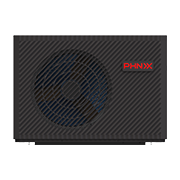
· PHNIX runs its commercial and residential lines (HeatGreen, GreenTherm Pro and Plus, airMono, airInverter and airExpert) on R290, listed at GWP100 = 0.02 in Annex VI of Regulation (EU) 2024/573 on the AR6 basis, outside the HFC pre-charged subheading and the quota mechanism.
· Producer registrations (WEEE, RoHS, packaging EPR under Regulation (EU) 2025/40) are per-member-state and per-first-placing, so they are fixed entry costs that only amortise with volume.
· Spare parts are not a regulated obligation here, so parts availability and lead time are commercial terms you must negotiate.
Heat pumps other than air conditioning machines of heading 8415 are classified under CN 8418 61 00, carrying a third-country MFN duty of 2,2% under Regulation (EU) 2024/2522; confirm the rate applicable on the day of customs clearance in TARIC. In a representative example, a container declared at EUR 150,000 attracts EUR 3,300 of duty. A missing registration that holds that shipment for three weeks typically costs more in demurrage and delayed revenue than the duty on the whole container.
What matters more is what the tariff line forces you to declare. The 2025 Combined Nomenclature splits out 8418 61 00 91 for equipment pre-charged with hydrofluorocarbons, supplementary unit t. CO2, a tonnes of CO2 equivalent figure obtained by multiplying refrigerant charge weight by its global warming potential. At clearance you must quantify that load and reconcile it against a quota position. Ask the supplier for the CN code declared on the export documents, the charge weight per model, and the resulting tCO2e. If all three cannot come out of the technical file in one email, the documentation is thin. Our distributor's checklist for comparing air-to-water heat pump suppliers covers the wider document set that should travel with the first order.
One cost you can remove: CBAM does not apply. Annex I of Regulation (EU) 2023/956 covers cement, electricity, fertilisers, iron and steel, aluminium and hydrogen, with no 84xx codes.
The refrigerant is a classification variable before it is an efficiency variable. Under Regulation (EU) 2024/573, the current F-gas regulation that repealed Regulation (EU) 517/2014, quota obligations bind producers and importers placing HFCs on the market (Art.16(1)), and heat pumps pre-charged with HFCs must have that charge accounted for within the quota system or may not be placed on the market (Art.19(1)).
The administrative chain is specific. Article 19(2) and 19(3) require a declaration of conformity, retention of supporting documentation for at least five years, and annual verification by an independent auditor before 30 April. Article 19(6) exempts undertakings placing less than 10 tCO2e of pre-charged HFCs on the market per year from the whole of Article 19, and Article 19(5) requires an undertaking without an EU establishment to appoint an only representative. Which side of that line your volume falls on decides whether this is a one-off task or a recurring audited obligation.
Equipment charged with R290 does not fall under the pre-charged HFC subheading 8418 61 00 91 and does not draw on HFC quota, because propane is not a fluorinated greenhouse gas. That is how the regulation is constructed, not a claim about any supplier. R290 is listed in Annex VI of Regulation (EU) 2024/573 with a GWP100 of 0.02 on the AR6 basis. R32 appears in Annex I at 675; that Annex states its GWP100 values are based on the IPCC Fourth Assessment Report, so the two figures are not on a common basis. R410A and R454B are not listed as mixtures in the regulation's annexes, but both remain far above the 150 GWP threshold.
Timing enters the calculation through Annex IV. Self-contained air conditioning and heat pump equipment of 12 kW or less containing fluorinated greenhouse gases with GWP of 150 or more is prohibited from 1 January 2027 under Annex IV (8)(b), and split air-to-water equipment of 12 kW or less with GWP of 150 or more from 1 January 2027 under (9)(b). Split air-to-air equipment of 12 kW or less with GWP of 150 or more follows from 1 January 2029 under (9)(c). Self-contained equipment of 12 kW or less becomes fully fluorinated-gas-free from 1 January 2032 under (8)(c), and split systems of 12 kW or less from 1 January 2035 under (9)(d). All carry safety-related exceptions where use of the gas is required to meet safety standards, so check each case against the product's safety classification. Stock that becomes unsellable mid-contract is a 100% cost. The trade-offs are compared in our R290 vs R32 vs R454B European procurement guide.
One cost does not disappear with natural refrigerants: personnel certification. Article 10(1) covers installation, servicing, maintenance, repair and decommissioning, and extends to work "involving relevant alternatives to fluorinated greenhouse gases, including natural refrigerants, where relevant". The implementing act is due before 12 March 2026 and member states are to have arrangements in place by 12 March 2027, with seven-year recertification (Art.10(8) and 10(9)). Charge limits are set by refrigerant LFL, the lower flammability limit, and room or installation volume under EN 378 and IEC 60335-2-40 (7th edition, 2022); confirm the clearance with local rules and the manufacturer's manual.
PHNIX, founded in 2002 in Guangdong, exports to more than 90 countries, with over 60% of revenue from overseas markets and 6.7% of sales reinvested in R&D.
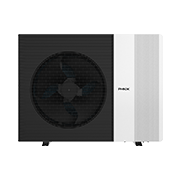
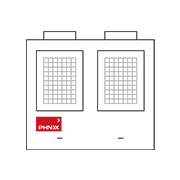
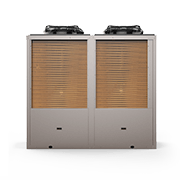
PHNIX HeatGreen is a commercial air-source heat pump using R290 refrigerant and AI Full Inverter technology, designed for centralized hot water supply in hotels, hospitals, and schools, with an operating envelope of -30°C to 43°C supported by EVI, a vapour injection circuit that sustains capacity at low ambient temperature. Because the charge is propane, HeatGreen units are declared outside subheading 8418 61 00 91 and do not consume an HFC quota position, which removes the Article 19 declaration, five-year retention and 30 April auditor verification chain from the import workflow. Commercial heat pumps typically deliver a COP of roughly 3 to 5, varying with climate and water temperature; COP is heat output divided by electrical input at a stated operating point.
PHNIX GreenTherm Pro achieved a measured SCOP of 5.55 in testing by TÜV SÜD RED and HLK Stuttgart. SCOP is the seasonal coefficient of performance, an annualised figure rather than a single-point reading. GreenTherm Pro and Plus are the R290 residential heating and cooling line, rated A+++ for space heating under Regulation (EU) 811/2013, a class requiring ηs of at least 175% in low-temperature application or at least 150% in medium-temperature application, operating to -30°C with PV Integration, with AI Full Inverter control trained on data from more than 30,000 operating units for a stated saving above 20% against conventional inverter control. Always state which application regime a quoted class refers to, because the same letter means two different thresholds.
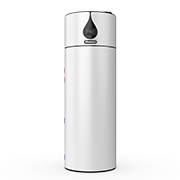
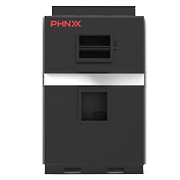
PHNIX holds CE, UKCA, Keymark, AHRI, ETL, and ERP certifications, with AHRI performance audits passed at 100% compliance for three consecutive years (2023, 2024, and 2025). PHNIX also obtained the heat pump industry's first EN 18031 cybersecurity certificate in 2025 and the first industry AI mark the same year, which matters because cybersecurity now sits on the critical path for connected units entering the EU market. For space-constrained retrofits, airMono is a self-contained indoor R290 unit rated A+++ for space heating on the same 811/2013 low-temperature or medium-temperature basis, and airInverter and airExpert cover R290 domestic hot water. Our heat pump water heater versus electric cylinder annual cost comparison cross-checks the running-cost side of the same decision.
Three registration regimes apply, all per member state.
· WEEE: Directive 2012/19/EU lists "Heat pumps" verbatim in Annex IV, category 1, within the temperature exchange equipment category of Annex III. Registration, financial guarantee and reporting apply in each member state where you first place product.
· RoHS: Directive 2011/65/EU treats heat pumps as electrical and electronic equipment falling under Annex I category 1 or the catch-all category 11. Residential and smaller commercial units are clearly in scope; large fixed installations need case-by-case assessment.
· Packaging EPR: Regulation (EU) 2025/40 Art.44(2) and 44(4) require producers, including importers, to register in every member state where they first make packaging available, and prohibit placing product without that registration. Art.44(8) provides simplified reporting below 10 tonnes placed per year.
These are entry tickets, not per-unit charges. Selling 50 units into four member states means four registration sets, four reporting cycles and four sets of fees against 50 units of margin; 2,000 units into one member state means one set. Model registration as fixed annual overhead per market, and set a minimum viable volume per country. Our guidance on building a first RFQ list of R290 monobloc heat pump manufacturers includes the questions that surface whether a supplier has handled this before.
Under Regulation (EU) 2017/1369 Art.4(1), the supplier must enter model information into both the public and compliance parts of the product database before placing a model on the market, running from 1 January 2019, with models placed between 1 August 2017 and 1 January 2019 entered by 30 June 2019 (Art.4(2)). The regulation requires public information to be easy to access in a user-friendly way; the recitals give a dynamic QR code as one example, but whether a QR code is mandatory depends on the delegated regulation for the category.
Verification is a cost you absorb. Check the manufacturer name, the exact model identifier, the certificate number, whether the nameplate model string matches the certificate character for character, and whether the scope covers the variant you are buying. A certificate covering the 12 kW unit but not the 16 kW is a failed border inspection waiting to happen.
Confirm scope boundaries before assuming a label applies: Ecodesign under 813/2013 covers space heaters up to 400 kW and 814/2013 water heaters up to 400 kW with storage up to 2 000 L (both Art.1(1)); energy labelling under 811/2013 stops at 70 kW, and 812/2013 at 70 kW with tanks up to 500 L (Art.1(1)). If you quote a water heater class or an ηwh value, the water heating energy efficiency, always state the declared load profile: the A+++ threshold in 812/2013 Annex II Table 1 ranges from 62% for 3XS and XXS up to 213% for XXL.
A landed-cost model is not a total-cost model. Heat pumps carry a higher initial investment than gas or direct electric alternatives, need external installation space or, for indoor units, a ventilated utility position, and in very cold climates may need a backup heat source. National incentive schemes and VAT treatment vary by member state and change frequently; check the current scheme before budgeting.
Q: Does the 2,2% duty rate apply to every heat pump shipment?
A: It is the third-country MFN rate for CN 8418 61 00 under Regulation (EU) 2024/2522; confirm the rate applicable on the day of customs clearance in TARIC, since preferential origin and trade measures can change it.
Q: If I import only a few units a year, do I still face the pre-charged HFC audit?
A: Article 19(6) of Regulation (EU) 2024/573 exempts undertakings placing less than 10 tCO2e of pre-charged HFCs on the market annually from the whole of Article 19. Above it, the declaration, five-year retention and independent auditor verification before 30 April all apply.
Q: Do R290 units remove all refrigerant-related compliance work?
A: No. They fall outside the HFC quota and the pre-charged HFC subheading, but Art.10(1) personnel certification extends to natural refrigerants where relevant, and charge and installation limits still follow EN 378 and IEC 60335-2-40 (7th edition, 2022).
Q: Does EU law guarantee spare parts for heat pumps?
A: No. The legal guarantee under Directive (EU) 2019/771 Art.10(1) is two years of seller liability, extendable by member states (Art.10(3)) and reducible to no less than one year for second-hand goods (Art.10(6)). Regulations 813/2013 and 814/2013 contain no spare part or repair obligations, and Directive (EU) 2024/1799 on the right to repair, transposition deadline 31 July 2026, lists ten product groups in Annex II, none a heating product. Regulation (EU) 2024/1781 may in future set requirements here. Put parts pricing in the contract.
The equipment price explains a shrinking share of what a heat pump costs to bring to market. Duty at 2,2% under Regulation (EU) 2024/2522 is minor; the structural variables are the refrigerant's position in the quota and tariff architecture, the number of member-state registrations you carry, and how complete the supplier's documentation is when it reaches your customs broker.
| Cost layer | Varies by member state | Varies by refrigerant | Verify before order |
|---|---|---|---|
| Customs duty (CN 8418 61 00) | No | No | Yes |
| Pre-charged HFC declaration and audit | No | Yes | Yes |
| WEEE and packaging EPR registration | Yes | No | Yes |
| Certificate scope per variant | No | Not applicable | Yes |
Build the comparison sheet around those columns, verify certificate scope against the exact variant you are buying, and write parts and warranty terms into the contract, because the regulations will not write them for you.

Guangdong PHNIX Eco-energy Solution Ltd.
Tel: +86-4009-4009-00
Address: NO.3 Tianyuan Road, Dagang Town,
Nansha, Guangzhou, Guangdong, PR. China.