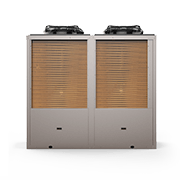
A heat pump water heater takes heat out of the air around it and moves that heat into a storage cylinder. That single sentence explains both why the technology is efficient and why the room you put it in matters so much. A unit standing in a warm utility room behaves very differently from the same unit standing in an unheated garage in January.
This article looks only at that question: what actually happens to a domestic heat pump water heater when the surrounding air gets cold, where the practical limits sit, and how to decide whether a basement or garage is a sensible location for your household. It is written for homeowners and specifiers making a purchase decision, not for installers sizing a plant room.
· A heat pump water heater does work in a cold basement or garage, but capacity and efficiency fall as ambient air temperature drops, and every unit has a stated lower ambient limit below which it switches to backup electric heating.
· Basements are usually the better of the two locations, because they sit below the frost line and stay more thermally stable than an attached or detached garage.
· Room volume matters as much as temperature. Too small a space and the unit chills its own air supply, which drags efficiency down over a long heating cycle.
· For flammable refrigerants such as R290, charge limits are set by refrigerant LFL and room or installation volume under EN 378 and IEC 60335-2-40 (7th edition, 2022); confirm the actual clearance with local installation rules and the manufacturer's manual.
· Defrost cycles become more frequent in cold, damp air, and each one temporarily borrows heat back from the system, so seasonal efficiency in a garage is lower than the headline rating.
· Honest limitations apply: higher upfront cost than a resistance cylinder, a need for real installed volume, and a backup element that will run more often in a genuinely cold location.
Two acronyms decide most of this. COP, or coefficient of performance, is the ratio of useful heat delivered to electricity consumed at one steady set of test conditions. A COP of 3.5 means 3.5 kWh of hot water energy for each kWh of electricity. SCOP, or seasonal coefficient of performance, is the same idea averaged across a range of conditions and part loads. Steady state ratings come from EN 14511, while EN 14825 handles the part load testing that seasonal figures and the ErP efficiency index are derived from.
For a water heater, the relevant physics is straightforward. The evaporator has to pull heat from the surrounding air. When that air is 20 degrees C, there is plenty of usable energy and the compressor works against a modest temperature lift to reach a 55 degree C cylinder. When the air is 2 degrees C, the lift is much larger, the refrigerant density entering the compressor is lower, and both heating capacity and COP fall. Nothing has broken. The machine is simply doing harder work.
The practical consequence is recovery time. A cylinder that reheats in roughly two hours in a warm room may take noticeably longer in a cold garage, and the controller may call on the immersion element to bridge peak demand. That is normal behaviour, not a fault, but it changes the running cost arithmetic you should be using.
The two spaces are often treated as equivalent. They are not.
| Location factor | Heated utility room | Unheated basement | Attached garage | Detached garage |
|---|---|---|---|---|
| Winter air temperature stability | Higher | Higher | Moderate | Lower |
| Risk of falling below the lower ambient limit | Lower | Lower | Moderate | Higher |
| Free waste heat available to recover | Moderate | Moderate | Lower | Not applicable |
| Cooling and dehumidifying effect is useful | No | Yes | Moderate | Not applicable |
| Condensate freezing risk | Lower | Lower | Moderate | Higher |
| Typically meets room volume requirement | Moderate | Yes | Yes | Yes |
A basement benefits from ground contact. Below the frost line the surrounding soil acts as a thermal buffer, so basement air rarely tracks outdoor extremes. It also tends to be humid, and a heat pump water heater dehumidifies the room as a side effect, which many homeowners treat as a bonus rather than a penalty.
A garage is more exposed. An attached garage sharing a wall with heated space is usually workable across most of a temperate European or North American winter. A detached, uninsulated garage in a continental climate is the marginal case, and it is where the lower ambient limit stops being theoretical.
Every domestic heat pump water heater has a stated operating window for surrounding air. Above the lower limit the compressor runs and you get heat pump efficiency. Below it the controller stops the compressor to protect it and falls back on the electric element, at which point efficiency drops to roughly that of a conventional cylinder.
Three points are worth holding onto. First, the limit is about the air entering the evaporator, not the outdoor forecast, so an insulated garage may stay inside the window even on a cold night. Second, brief excursions below the limit are not damaging; the unit simply switches mode and switches back. Third, if your location sits below the limit for weeks at a time, the machine is in the wrong room and the economics stop working.
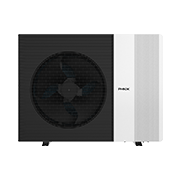
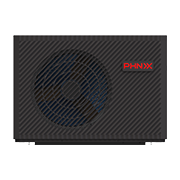
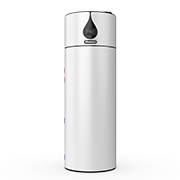
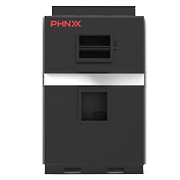
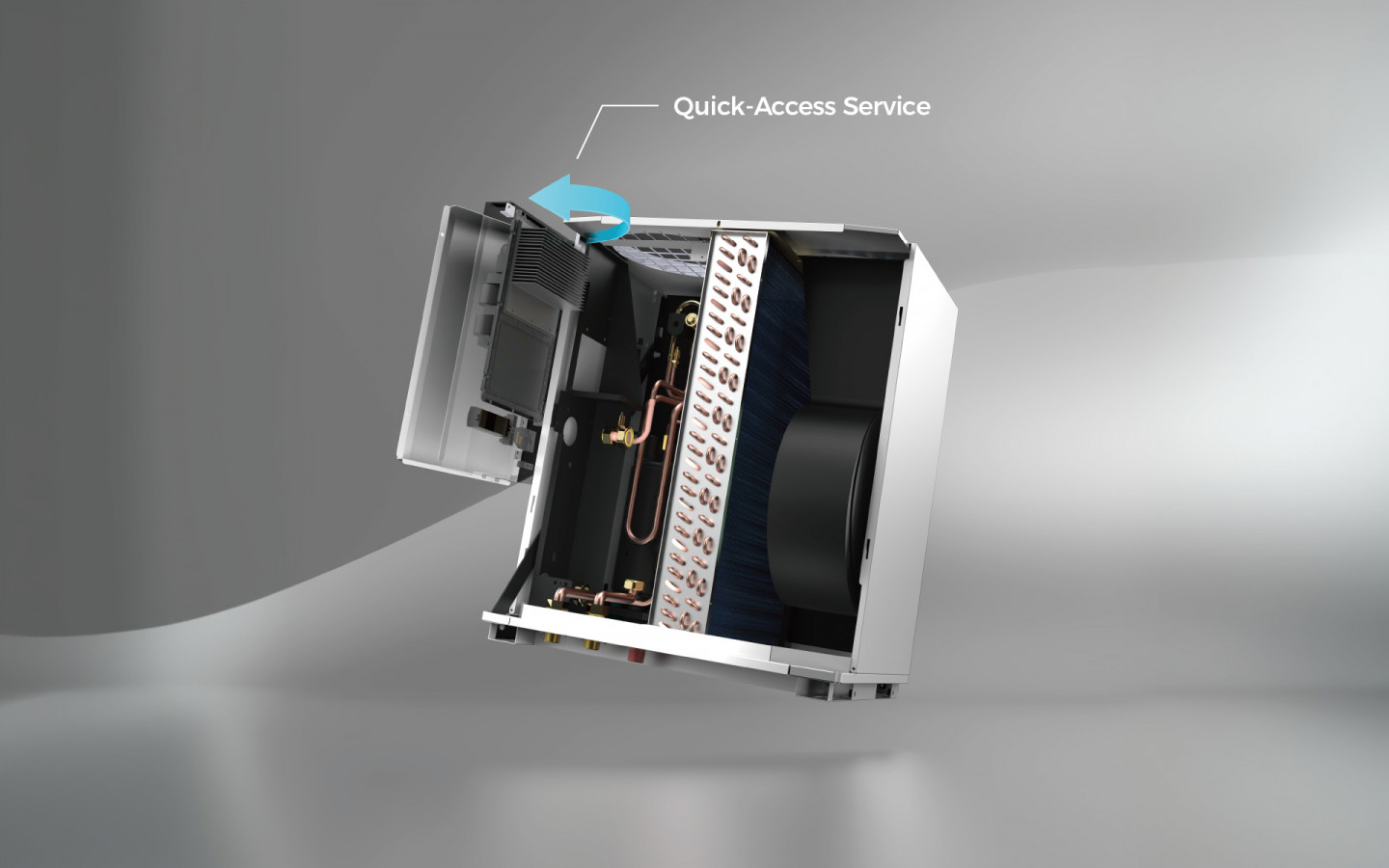
PHNIX airInverter and airExpert R290 units are domestic heat pump water heaters designed for indoor placement as an all in one cylinder and heat pump package, which is exactly the format suited to basement and utility installations. Product details are on the domestic heat pump water heater range page.
The most common installation mistake has nothing to do with cold. It is putting the unit in a space too small to feed it.
A heat pump water heater continuously discharges chilled air. In an adequately sized room, that chilled air mixes and is replenished by heat from the building fabric, other appliances and ventilation. In a sealed cupboard, the unit re-ingests its own exhaust, the inlet temperature spirals downward through the cycle, and measured efficiency collapses well before any safety limit is reached.
Manufacturers therefore state a minimum room volume, and most units support ducting so that intake or exhaust air can be drawn from or pushed to an adjacent space. Ducting is the standard answer when the only available location is tight. It costs a little static pressure and a little fan power, and it is far better than starving the machine.
A separate volume requirement applies to the refrigerant itself. R290, propane, has a GWP100 of 0.02 under Annex VI of Regulation (EU) 2024/573, the current F-gas regulation that has applied since 11 March 2024. That near zero climate impact is why it is displacing higher GWP fluids such as R32 at 675 on the same AR6 basis. Propane is flammable, so charge limits are set by refrigerant LFL and room or installation volume under EN 378 and IEC 60335-2-40 (7th edition, 2022); confirm the actual clearance with local installation rules and the manufacturer's manual. The two volume rules, performance and safety, are independent and both have to be satisfied.
When evaporator surface temperature falls below both freezing and the dew point of the surrounding air, frost forms. The unit then runs a defrost cycle, briefly reversing or otherwise warming the coil, which consumes energy and pauses heat delivery. Cold plus damp is the worst combination, and an unheated basement in autumn can generate more defrost activity than a dry cold garage.
Two practical items follow. The condensate drain must be routed so it cannot freeze, which in a garage means keeping the run inside the thermal envelope or using a heated trace. And the seasonal figure you should budget against is the one that includes defrost losses, not the peak COP in a marketing table.
| Check | Why it matters | Acceptable answer |
|---|---|---|
| Coldest recorded air temperature in the room | Determines time spent on backup element | Above the unit's lower ambient limit |
| Actual room volume against the datasheet | Prevents self chilling of intake air | Meets or exceeds stated minimum |
| Ducting possible if volume is short | Restores usable air supply | Yes |
| Frost free condensate route | Avoids blockage and overflow | Yes |
| Refrigerant charge versus room volume | Required for R290 compliance | Confirmed by installer |
| Electrical supply for backup element | Needed for cold snaps and peak draw | Yes |
PHNIX has manufactured heat pumps since 2002, employs more than 1,000 people, exports to over 90 countries and reinvests 6.7 percent of sales in research and development. Its water heating line is built around R290.
PHNIX airInverter and airExpert R290 are domestic heat pump water heaters supplied as indoor all in one units, which makes them a direct fit for basement, utility room and insulated garage installations where a single cabinet is preferred over a split arrangement. Both are covered on the R290 hot water heat pump page.
PHNIX airMono R290 is the company's indoor monobloc heat pump, developed for retrofit apartments and older buildings where outdoor space is unavailable, and it is A+++ rated in low temperature application. It is a space heating product rather than a dedicated water heater, so it belongs in the conversation only when the same constrained indoor room has to serve both duties.
Where the requirement is central heating rather than domestic hot water, the GreenTherm Pro R290 air to water range is the relevant line, independently measured by TUV SUD RED and HLK Stuttgart at an SCOP of 5.55. PHNIX has also passed AHRI performance verification with a 100 percent pass rate for three consecutive years, 2023, 2024 and 2025, which is a useful signal when comparing published ratings across brands. The wider heating and cooling heat pump catalogue covers the rest of the portfolio.
Under Regulation (EU) 814/2013 Annex II, minimum water heating energy efficiency is 36 percent for the M load profile and 37 percent for L and XL. Load profiles describe a standard daily draw pattern, with reference energy of 5.845 kWh for M, 11.655 kWh for L and 19.07 kWh for XL according to Annex III Table 1. Choosing the right profile matters more than chasing a headline efficiency number, because an oversized cylinder in a cold room simply spends longer standing and reheating.
For space heating products the parallel thresholds are the Ecodesign minimum seasonal efficiency of 110 percent at medium temperature and 125 percent at low temperature under Regulation (EU) 813/2013 Annex II, with the A+++ label requiring 150 percent and 175 percent respectively under Regulation (EU) 811/2013 Annex II.
Q: Will a heat pump water heater freeze my garage?
A: It will cool the room it draws from, which is noticeable in a small space and negligible in a large one. In a basement the dehumidifying effect is usually welcome; in a garage used as a workshop, ducting the exhaust outside is the common remedy.
Q: Does a cold room damage the unit?
A: No. The controller stops the compressor below its stated lower ambient limit and uses the backup element instead. The cost is efficiency, not equipment life.
Q: Is R290 safe indoors in a basement?
A: R290 units are certified for indoor use within defined charge and room volume limits under EN 378 and IEC 60335-2-40. The installer confirms the specific room meets those conditions before commissioning.
Q: Can I put the unit in a small plant cupboard?
A: Only with ducted intake and exhaust. Without ducting, the unit recirculates its own chilled air and the real world efficiency will be far below the rating.
Q: How much efficiency do I lose in an unheated space?
A: There is no single figure, because it depends on the local climate, room volume and draw pattern. Ask your supplier for performance at the lowest air temperature you expect, not just the nominal rating point.
Start with the coldest air temperature the candidate room actually reaches, measured over a winter week rather than assumed. Compare it against the unit's lower ambient limit and accept that time spent below that limit runs at resistance heater efficiency. Then measure the room volume and check it against both the performance minimum and the refrigerant charge rule, adding ducting if either falls short. Finally, match the load profile to your household draw rather than to cylinder size, and price the installation against the incentive available in your market, such as the UK Boiler Upgrade Scheme grant of GBP 7,500 for air source systems or the SEAI cap of EUR 12,500 for a heat pump system package in Ireland.
If the room clears all three tests, a basement or insulated garage is a good home for a heat pump water heater. If it fails the temperature test for long stretches, the honest answer is to move the unit indoors or to duct its air supply from heated space.

Guangdong PHNIX Eco-energy Solution Ltd.
Tel: +86-4009-4009-00
Address: NO.3 Tianyuan Road, Dagang Town,
Nansha, Guangzhou, Guangdong, PR. China.