Recovery time is the single number that decides whether a household loves or resents its hot water system. It describes how long a water heater needs to bring a tank of cold water up to the set temperature, or to replace the hot water that a shower just drained. With a conventional electric cylinder the answer is simple physics: a resistance element turns kilowatt hours into heat at close to a one to one ratio. With a heat pump water heater the answer is more interesting, because the appliance is moving heat rather than creating it, and that changes both the speed and the running cost of every litre.
· Recovery time for a heat pump water heater is typically two to three times longer than for a direct electric element of similar rated input, because the compressor draws far less power while delivering more heat per kilowatt hour.
· Tank volume, inlet water temperature, ambient air temperature and target set point are the four variables that dominate recovery time in real installations.
· Correct sizing, not raw speed, is what removes the problem: a larger or better stratified tank makes slow recovery invisible to the household.
· Inverter compressors and smart scheduling let the appliance recover during cheap or solar hours, which converts a slower heat up into a lower bill.
· PHNIX builds its domestic hot water range around R290 propane, which carries a GWP100 of 0.02 under Annex VI of Regulation (EU) 2024/573 and is unaffected by the HFC quota squeeze.
· A backup electric element remains useful for unusual demand peaks, but a properly sized unit should rarely need it.
There is no single universal definition, which is why comparing brochures can be frustrating. Manufacturers usually publish one of three figures. The first is full heat up time, meaning the minutes required to raise an entire tank from a cold fill (often 10 to 15 °C) to the storage set point, commonly 55 °C. The second is first hour rating, the volume of usable hot water the appliance can deliver in sixty minutes starting from a fully heated tank, which combines stored volume with live reheating. The third is reheat time after a defined draw, for example the minutes needed to restore the tank after 100 litres have been removed.
Full heat up time is the most dramatic figure and the least relevant to daily life, because a tank only starts from fully cold after installation or a long absence. First hour rating is the number that best predicts whether a family of four gets three consecutive showers. When you evaluate quotes, ask the supplier which definition their minutes refer to, and at what ambient air temperature the test was run. Air temperature matters enormously for a heat pump and not at all for a resistance element.
A heat pump water heater does not burn electricity to make heat. It uses a compressor to lift low grade heat out of the surrounding air and deposit it into the tank. The physics is favourable: for every kilowatt hour of electricity consumed, the appliance can move roughly three to four kilowatt hours of heat into the water under normal indoor conditions. That is the reason running costs fall so sharply compared with a direct element.
The trade off is thermal power. A typical domestic heat pump water heater compressor draws somewhere in the region of 0.5 to 0.9 kW of electrical input and therefore delivers perhaps 1.8 to 3 kW of heating output. A conventional electric cylinder element is often 3 kW on its own, and twin element cylinders go higher. So the heat pump is delivering a similar or slightly lower thermal output while consuming a fraction of the power. Slower recovery is not a defect. It is the direct consequence of the efficiency that makes the appliance worth buying.
The following table sets out how the two approaches compare on the factors homeowners actually notice.
| Factor | Heat pump water heater | Direct electric cylinder |
|---|---|---|
| Electrical input for the same tank | Lower | Higher |
| Thermal output during recovery | Moderate | Higher |
| Running cost per litre of hot water | Lower | Higher |
| Sensitivity to ambient air temperature | Yes | No |
| Benefits from solar self consumption scheduling | Yes | Yes |
| Suitable for very small technical cupboards without ventilation | No | Yes |
Four inputs explain most of the variation between one installation and the next.
· Tank volume. Energy required scales linearly with litres. Doubling the tank doubles the full heat up time at constant compressor output, but it also doubles the buffer that hides slow recovery from the user.
· Temperature lift. Raising water from 12 °C to 55 °C is a 43 K lift. Pushing the same tank to 60 °C for a legionella cycle adds noticeably more minutes, because the compressor also loses efficiency as condensing temperature rises.
· Ambient air temperature. An integrated unit sitting in a 20 °C utility room recovers appreciably faster than the same unit in a 7 °C garage. This is the variable that catches people out when they compare a summer commissioning test with a January morning.
· Compressor modulation. A fixed speed compressor runs at one output. An inverter compressor can run hard when the tank is deeply discharged and then throttle back, which shortens the perceived recovery while protecting efficiency at part load.
A useful mental model is that energy in kilowatt hours equals litres multiplied by temperature lift divided by 860. A 200 litre tank with a 43 K lift needs about 10 kWh of delivered heat. At 2.5 kW of heat output that is roughly four hours from stone cold, and far less for the partial reheat that follows a single shower.
The professional answer to slow recovery is almost never a bigger compressor. It is a correctly sized and well stratified tank. Stratification means the hot layer sits cleanly on top of the cold incoming water rather than mixing, so the top of the cylinder stays usable while the bottom is still being worked on. Good internal design, a properly positioned cold feed diffuser and a condenser wrapped or coiled low in the tank all help preserve that layering.
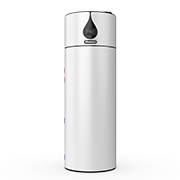
For a two person household a 150 to 200 litre unit is usually comfortable. A family of four with a bath habit is better served by 250 to 300 litres. Oversizing has a modest standing loss penalty but it buys resilience, and standing losses on a modern insulated cylinder are small relative to the cost of running out of hot water and reaching for the backup element. You can review the integrated options in the PHNIX domestic heat pump water heater range to see how tank volumes are matched to compressor output.
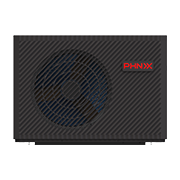
PHNIX airInverter and airExpert R290 units are all in one domestic hot water heat pumps designed for indoor placement, and they are sold widely across European and Australian markets. Building the range on propane matters here: R290 has a GWP100 of 0.02 in Annex VI of Regulation (EU) 2024/573, so it faces none of the quota pressure that applies to R32 at GWP100 675 under Annex I. Refrigerant charge limits are set by refrigerant LFL and room or installation volume under EN 378 and IEC 60335-2-40 (7th edition, 2022); confirm the actual clearance with local installation rules and the manufacturer's manual. The detail of the R290 hot water heat pump platform shows how that is handled in a compact indoor cabinet.
The smartest way to deal with a slower heat up is to make sure it never happens when anyone is waiting. Modern controls give three tools for that.
Scheduling is the first. If the appliance reheats between midnight and six, the household wakes to a full tank and the compressor has worked in the cheapest tariff window. Second is photovoltaic coupling, where surplus solar generation is diverted into the tank as thermal storage rather than exported. A hot water cylinder is the least expensive battery most homes will ever own. Third is adaptive learning. PHNIX AI Full Inverter control was trained on more than 30,000 units of field operating data and delivers energy savings above 30 percent versus conventional inverter control in residential and commercial applications, by predicting demand patterns and running the compressor at its most efficient speed rather than in hard on and off cycles.
Electricity price context makes the case concrete. Eurostat household electricity prices for the second half of 2025, including taxes, in the 2,500 to 5,000 kWh consumption band, put the EU27 average at 0.2896 EUR/kWh. At roughly 0.29 EUR/kWh, moving a 10 kWh reheat from a resistance element at a COP of 1 to a heat pump at a COP of 3 saves around 1.90 EUR per full tank. Repeat that most days of the year and the arithmetic speaks for itself.
Efficiency claims for hot water appliances sit under a specific regulatory frame that is worth understanding before comparing brochures. Ecodesign Regulation 814/2013 Annex II 1(b) has required, since 26 September 2017, minimum water heating energy efficiency of 36 percent for load profile M and 37 percent for L and XL. The reference energy consumption Qref in Annex III Table 1 is 5.845 kWh for M, 11.655 kWh for L and 19.07 kWh for XL, so declared efficiency is always relative to a defined tapping pattern rather than to an abstract test. The A+++ thresholds under labelling Regulation 812/2013 Annex II Table 1 are ηwh of at least 163 percent for M, 188 percent for L and 200 percent for XL.
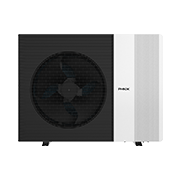
For space heating products the picture is separate again, and the two must not be mixed. PHNIX GreenTherm Pro is an R290 air-to-water heat pump rated A+++ in low-temperature application, where Regulation 811/2013 Annex II Table 2 sets the threshold at ηs of at least 175 percent, and it has been measured at SCOP 5.55 by TÜV SÜD RED and HLK Stuttgart, as documented on the TÜV SÜD SCOP 5.55 verification page. On test methods, EN 14511 covers steady state rated COP and EER, EN 14825 covers part load SCOP and SEER from which the ErP seasonal efficiency is derived, and EN 12831 covers design heat load.
PHNIX holds CE, UKCA, Keymark, AHRI, ETL and ERP certifications, with AHRI performance audits passed at 100 percent compliance for three consecutive years (2023, 2024 and 2025). The company also received the first EN 18031 cybersecurity certificate issued in the heat pump industry in 2025.
Recovery time is a comfort question, but purchase decisions are usually settled on cost. In the United Kingdom the Boiler Upgrade Scheme pays £7,500 for air source, ground source and water source heat pumps, with £9,000 for off gas grid eligible properties and £2,500 for air to air. UK VAT on energy saving materials is zero rated from 1 May 2023 to 31 March 2027, returning to 5 percent from 1 April 2027. Ireland applies a 9 percent VAT rate to heat pump installation under VATCA 2010 s.46(1)(ca), a separate mechanism from the UK zero rate and not interchangeable with it. SEAI offers a heat pump grant in Ireland, but it requires a technical assessment of the home's heat loss indicator first; check the current grant values and thresholds with SEAI before quoting a figure to a customer. In France, MaPrimeRénov' rénovation d'ampleur covers 80, 60, 45 or 10 percent of eligible spend by income band, with expenditure caps of 30,000 EUR excluding tax for a two class DPE improvement and 40,000 EUR for three classes or more, alongside a 5.5 percent VAT rate.
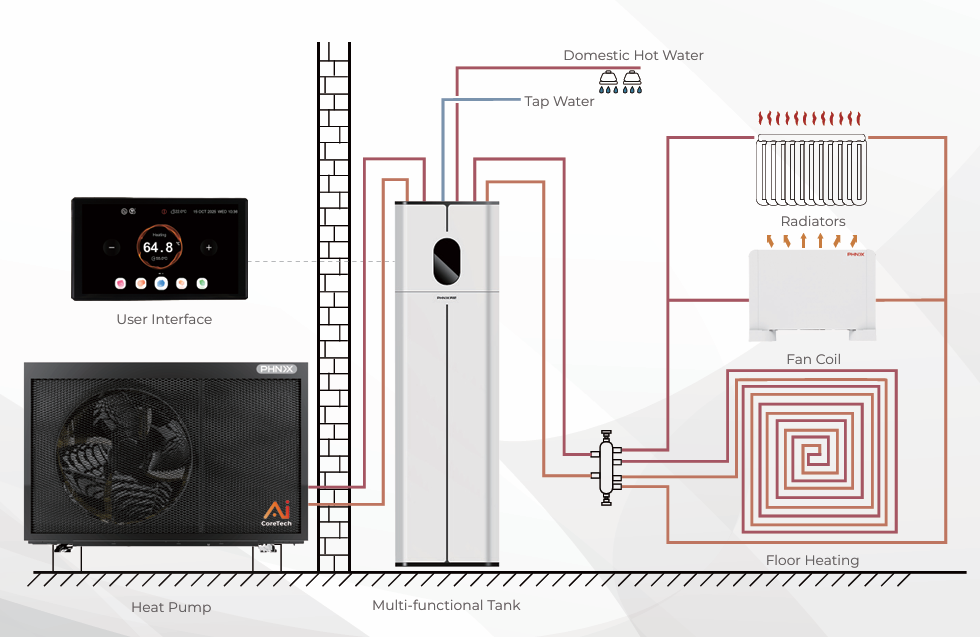
Households replacing a whole system rather than just a cylinder can compare options across the wider residential heating and cooling category, since a single air-to-water unit with a cylinder sometimes makes more sense than two separate appliances.
Q: How long does a heat pump water heater take to heat a full tank from cold?
A: For a 200 litre tank taken from about 12 °C to 55 °C, expect roughly three to five hours in a warm indoor space, and longer in a cold garage. Partial reheats after a single shower are far quicker, typically well under an hour, which is what daily use actually looks like.
Q: Should I leave the backup electric element enabled?
A: Yes, but treat it as insurance rather than a routine heat source. Most controllers only call the element when ambient temperature falls outside the compressor envelope or when demand outruns recovery. If it is running often, the tank is undersized for the household.
Q: Does a bigger tank make recovery time worse?
A: It lengthens the full heat up from cold, but it improves the experience, because a larger stored volume means the household rarely reaches the point where recovery speed is noticeable. Sizing the store correctly is a more effective fix than chasing a faster compressor.
Heat pump water heater recovery time is slower than a resistance element because the appliance trades thermal power for efficiency, and that trade is a good one. Once the tank is sized for the household, stratification is preserved and the controller is scheduled to reheat overnight or on solar surplus, recovery time stops being a lived experience and becomes a specification line. PHNIX designs its domestic hot water range around R290, inverter compressors and AI driven control precisely so that the slower physics never reaches the shower. Explore the full product portfolio at PHNIX or ask a local installer to model your first hour rating against real household demand before choosing a tank size.

Guangdong PHNIX Eco-energy Solution Ltd.
Tel: +86-4009-4009-00
Address: NO.3 Tianyuan Road, Dagang Town,
Nansha, Guangzhou, Guangdong, PR. China.